
Mass Timber Insurance Action Plan
In partnership with

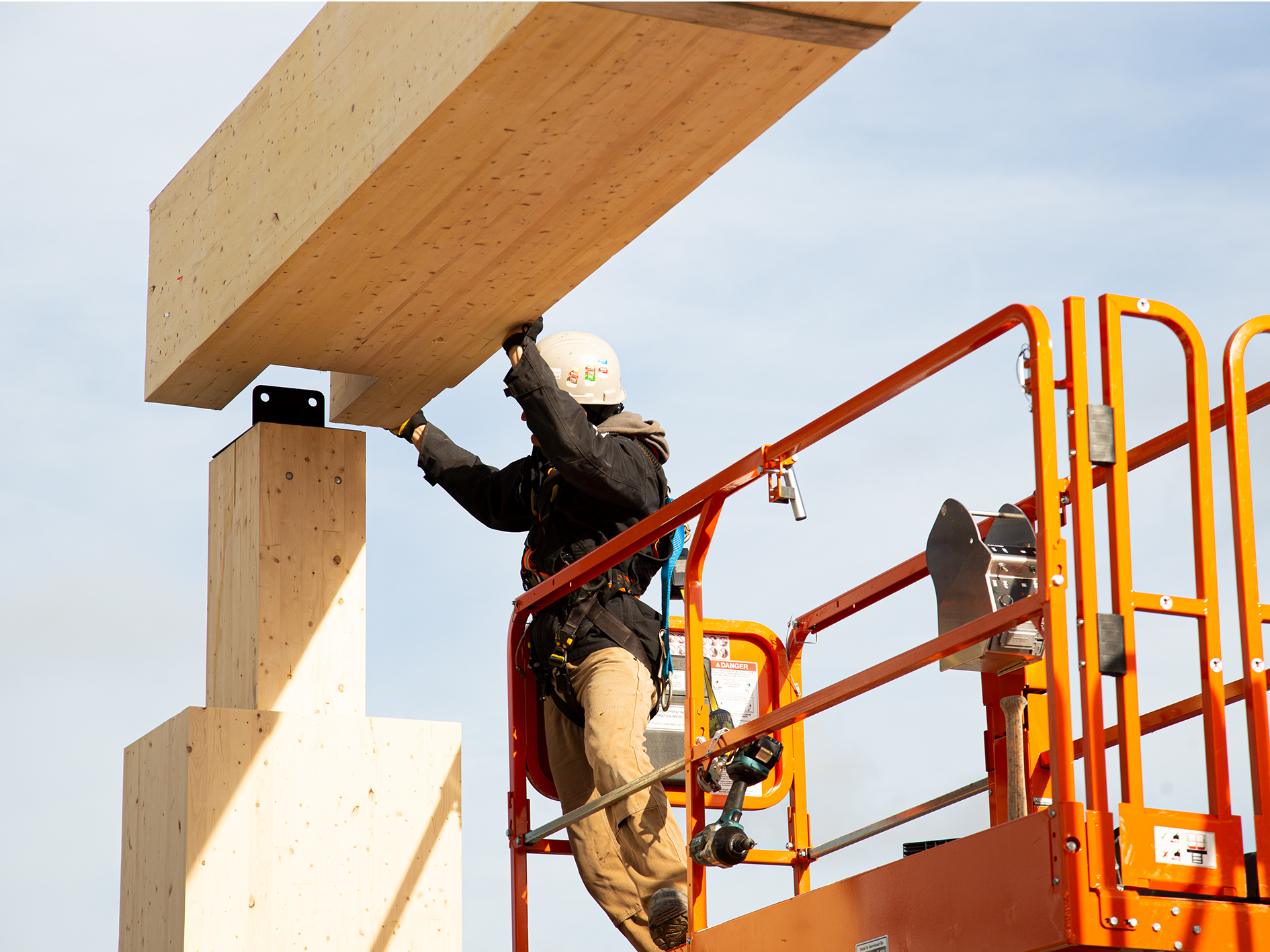
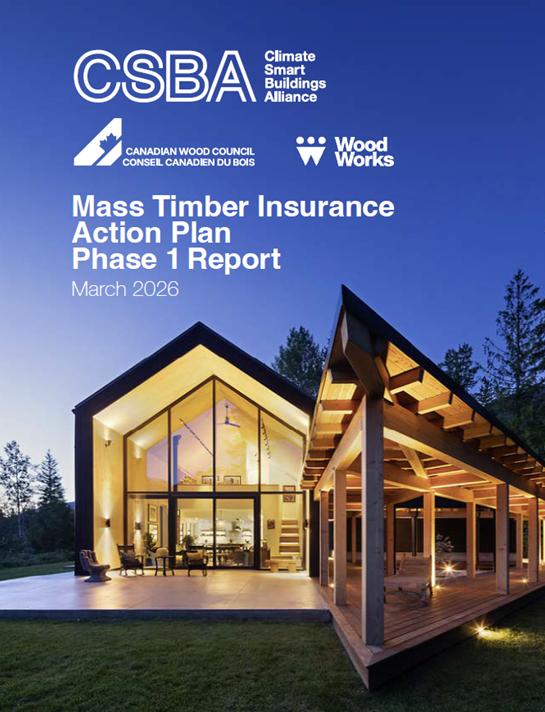
Mass Timber is one of many innovative bio-based materials that can help make the built environment a carbon sink. How can we address system barriers that are inhibiting adoption?
Elevated course-of-construction and occupancy insurance rates are consistently identified as a primary barrier to the broader adoption of mass timber. Some developers cite rates that are 4-10 times higher than those for buildings constructed with concrete and steel. To enable mass timber and other bio-based materials to scale up and have a significant climate impact, we must tackle the insurance barrier at the systemic level.
In 2024, the Climate Smart Buildings Alliance (CSBA) and the Canadian Wood Council (CWC) brought together 40 professionals from the insurance and building sectors in Toronto and Vancouver to uncover the root causes of elevated mass timber insurance rates and to develop potential solutions addressing risk concerns.
The outcome was the creation of a Mass Timber Insurance Action Plan, which over 2025 launched four pilots to address key concerns identified by the insurance industry:
- Increase the volume of risk/loss data through a mass timber insurance data trust.
- Solve the knowledge gap by creating a mass timber research database and establishing go-forward research priorities.
- Explore solutions to the limited capacity of mass timber insurance and reinsurance.
- Develop a method for insurers to verify contractors’ specialized experience with mass timber.
Phase 1 of the Action Plan was completed in March 2026. Outputs include:
- The creation of an independent GC scoring methodology for expertise with mass timber – now commercialized with Bespoke Metrics.
- Development of a pro forma for a government-backed insurance captive – a revenue neutral tool that would increase capacity.
- Creation of a database of insurer-relevant research and a research strategy to address insurer knowledge gaps.
The Mass Timber Insurance Action Plan was supported by the Government of Canada through NRCan’s Green Construction Through Wood program.
Phase 1 – Individual Workstream Reports
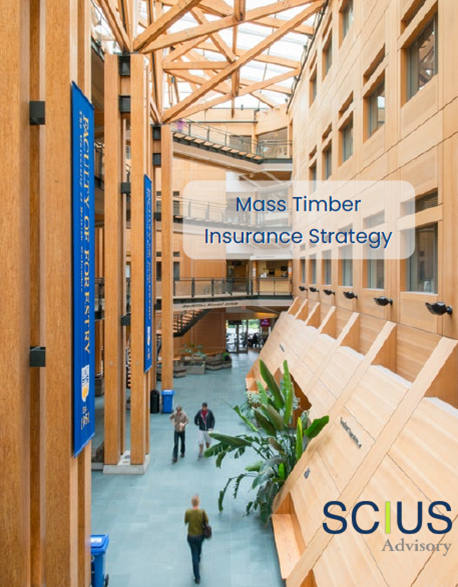
Research Workstream Report – SCIUS Advisory
Academic and government research on mass timber has focused on code and safety. There’s now a need to address insurance concerns—especially value recovery and retention. The Research workstream is exploring how public data can better support insurers in risk assessment.
The initial report highlights 12 insurer-prioritized research areas and proposes design principles for tests that deliver insurance-relevant insights.
Contractor Verification Methodology – Bespoke Metrics
Mass timber construction demands specialized expertise, making a GC’s experience critical to insurance risk assessment. In partnership with Bespoke Metrics, the working group developed a neutral, third-party methodology to score GC risk in mass timber projects.
The aim is to standardize insurer evaluations and guide contractors toward low-risk best practices.

Insurance Capacity Solutions
Limited insurance capacity means some mass timber projects struggle to secure coverage, and larger builds often require 6–10 insurers to underwrite.
Working with Dion Strategic and BLG, the Capacity Workstream developed innovative frameworks showing how a government- or industry-backed captive insurer could cost-neutrally expand capacity, support industry growth, and reduce premiums.
Mass Timber Insurance Data Trust
Insurers design risk models using large datasets of historical claims. The limited number of mass timber claims makes this difficult, leading insurers to adopt more conservative positions than the evidence may ultimately warrant. This project investigated two potential data trust structures to address this gap: a data-sharing arrangement among insurers, and a separate trust between insurers and general contractors focused on sub-deductible incidents.
Data Trust Report Appendices
Appendix 1; Appendix 2; Appendix 3
Want to get involved?
We’re forming a broad national coaltion of insurers, builders, manufacturers researchers and policy advocates to help advance the Mass Timber Insurance Action Plan. If you’re interested in helping to develop solutions, we’d love to have you involved.